RPG Review – 7th Sea Second Edition
At A Glance –
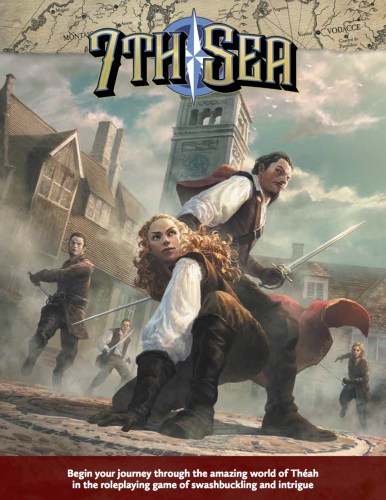
For those of you who don’t know, 7th Sea 2nd Edition is a tabletop RPG set in “Theah”, a world very similar to 17th century Europe.
Pirates, heroes, political intrigue and secret societies in a world peppered with legends and lore, a pinch of sorcery, and a punch of corruption set the backdrop for the fantastic tales of your swashbuckling, savoy heroes. All told with cinematic flare in this beautiful little 300 page gem by John Wick.
As most of you know, I don’t usually like to compare games that I’m reviewing with other games. That said, this is the 2nd edition of a game that I enjoyed very much so I think the review needs a little comparison to be complete. I really liked the original edition of 7th Sea. It was a fun and refreshing look at the genre presented in a way that hadn’t really been done before. pussy88
The second edition is trimmed down a bit. Sleeker mechanics and speedier action make for slightly fewer choices for the players but add so much more to the collaborative storytelling aspect of the game.
In short, I LOVE this edition!
Now that we have that out of the way,
On with the review!
The Book –
The book itself is absolutely beautiful. The pages are filled with gorgeous and immersive landscapes, believable character portraits, and inspiring scene captures by a team of fantastic artists. The rules are concise, with examples of execution, well laid out, and easy to find.
The Setting –
As mentioned before, the setting is roughly 17th century Europe with the names changed to protect the innocent. This allows the players and GM to draw on the shorthand knowledge that they have about the real world country and/or culture upon which it is based. The first 130 pages or so are dedicated to fleshing out Theah. This section breaks down the individual countries, some of their collective views and values, a brief overview of the customs, important people, social strata, military, religion, etiquette, etc. I wanted to just breeze over this section but wound up reading every word. The attention to detail exercised here really comes through in the final product. There is even a beautifully rendered coat of arms displayed for each one. An important detail for a pirate campaign, methinks.
Be sure to click the link below to see a map of Theah!
7thSea_Map_1
The System –
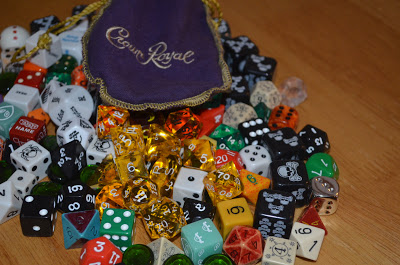
The conflict resolution system for this game really sings. It utilizes a d10 dice pool. The size of your pool is determined not only by your stats, but also the type of action that you choose to take, as well as how you plan to portray that action in game. In short, the more cinematic the action and immersed in the character you are, the more opportunities for success you have. You are rewarded for using different types of actions in a scene, promoting the use of any and all skills that your character possesses. This helps to eliminate the hack and slash feel that you get with a lot of games. Sometimes it may make more sense from a productivity standpoint to just slash with your sword again instead of punching the bad guy in the jaw, even though in a lot of cases the right hook would just feel better. This game rewards that sentiment.
This game approaches scene setting in a manner very similar to the medium that inspired it…
You guessed it, swashbuckling movies!
The scenes are framed by the GM. The individual players announce how their character would like to approach the problem. Whether they decide to be talky, sneaky, fighty, flighty, sexy, etc., the GM decides what stats and skills apply. Then he tells the players what the consequences of their actions will be as well as any opportunities that will arise from them. The players roll their dice pool, collecting “raises” (sets of dice that add up to 10) and choose how to spend their raises in regards to completing their goal, overcoming consequences, taking advantage of opportunities, helping out their fellow heroes, etc. They can also choose to simply fail.
I love this mechanic!
Sometimes the hero gets captured, drops the McGuffin, or slips over the edge. This game rewards that decision to heighten the tension with something called Hero Points. Hero Points can be spent later to accomplish truly awesome things when they most matter. (Just like the movies! Huh…imagine that.)
The heroes don’t have “hit points”, they take wounds as a result of bad rolls or choices they made while spending their raises. These wounds are tracked by a portion of the character sheet ominously called “the death spiral.” This is a spiral of circles and stars that get colored in as heroes get injured. Every fifth wound taken by a hero is a “dramatic wound”. Wounds themselves are no big deal but dramatic wounds serve to heighten the tension of the scene. And once again, the further down the death spiral the hero falls, the more awesome stuff he can do…
Just like…well, you get it.
The game handles conflict resolution in social situations, action scenes, and large scale battles in pretty much the same manner, what changes is the time that elapses in game and the scale of the conflict. This, as well, is beautifully executed as it breeds familiarity with the system allowing it to take a back seat to the story sooner regardless of what size or type of pickle the heroes have found themselves in. Also, because of both the intuitive nature of the system and the speed with which the players and GM achieve familiarity with it, most conflicts are resolved very quickly regardless of size. There are so many more subtleties to this system that I can’t touch on them all here without just rewriting the rules for you.
As a special note, the naval rules in this game are some of the best that I’ve ever seen. They come complete with descriptions of the types of ships available, as well as list of the positions and personnel needed to man them. As with a lot of naval legends and lore, ships in this game are characters unto themselves. In this chapter you’ll find superstitions, adventure seeds designed for the advancement of ships, and even rules for bringing them back from the dead. I’m understating this on purpose. The naval rules alone are worth the price of the book.
I want to steal them…
…incorporate them into every game I play…
…lie to my players and tell them that they’re mine…
…be revered as the greatest GM of all time…
*rubbing hands together “MUHAHAHAHA!”
Character Creation –
The character creation process is, for lack of a better word, deep. In a lot of RPGs you create a framework of a character and hang personality on it like a mannequin. In 7th Sea Second Edition, this process is front loaded so that when you sit down at the table for your first session you have a fully realized hero complete with an identity, a personality, an outlook, a past, and their own story to tell. The character creation process begins with a concept and then you are asked to consider 20 questions about your hero. Most, but not all of these will be answered from your hero’s perspective.
Rest assured this isn’t a hippy-dippy-story-sticky type of game, however. There are more than 20 pages with lists of traits, backgrounds, advantages, skills, and other things to keep the min-maxers and number jugglers in your group happy. This doesn’t even count the sorcery section of the book which we’ll get to shortly.
I suggest having a character creation session with your group. Watching all of the heroes take shape together will both help you as the GM become familiar with the character concepts and you’ll see that the players begin feeding off of the creative energy in the room.
Magic –
Magic in this game is as varied as the cultures of Theah. Meaning that there is no specific system that governs the use of all magics.
It’s more of a sorcery flavor selection, like a fountain at a large gas station that dispenses magic instead of soda.
Each of the cultures has their own brand of the supernatural and they are all represented very well in the book, beautifully capturing the essence of their superstitions and mysticism. The chapter on sorcery is worth reading just for the flavor and immersive way that it’s presented.
The GM –
A lot of the work for a campaign is, like character creation, front loaded because as the GM is building the framework of the story that will be told by the group he must also consider the stories of the individual characters in the group. At first glance, this game looks like it brings back the “Workhorse GM” concept of running a game but, trust me you get very adept very quickly at leading players through the story once you actually begin playing. Improvisational GMing is definitely possible with 7th Sea 2nd Edition but that’s no excuse for poor preparation. The last chapter in the book is extremely informative for both new GMs and those that are just new to the game. Even old guys like me will probably learn a thing or two.
Read it.
Price Point – $24.99 (PDF) – $59.99 (Hardcover)
For this price, you get the entire game. No other books are needed to play. Considering the quality of the book, art, and mechanics, this is a fine price.
Versatility –
Tabletop RPG experiences are as varied as conversations among friends. Because of this, the game itself must be versatile in order to stand up to years of playing. The framework has to be flexible in order to tell a myriad of stories. While I haven’t had it for years, you can tell when a game is a one trick pony and this one is not. As well as the swashbuckling stories that were the inspiration for the game, John Wick and company have put together a beautiful toolbox with which to tell tales of dark fantasy, political intrigue, or “lone wolf’ stories ranging from grim-dark street level campaigns to high profile kingdom-shakers.
The choice is yours, it will not disappoint.
Rating – 10 out of 10
I rarely hand out a 10 in regards to an RPG. My reasoning for this is that any given session of a tabletop RPG exists in a vacuum and the experience is subject to the moods and whims of those around the table. This can make it very difficult to give a game a fair shake upon reviewing if somebody in your game group had a rough day at work. The way I rate an RPG is by assessing how well it does the job that it sets out to do.
This one performs beautifully.
If you want to tell stories like “The Three Musketeers”, “The Man in the Iron Mask”, “The Mask of Zorro”, “Robin Hood”, etc., this is the game you want.
Final Thoughts –
By changing the way that wealth and equipment work to a more abstract system, as well as lossening some of the restrictions on skills and such, the second edition of 7th Sea does trim out some of the bulk of the original edition, this is sure to ruffle some feathers. That said, I beleive that it was done in good spirit with the motivation being to streamline scene setting and resolution with a focus on getting the players into the action.
To me, this game is a truly romantic exploration of the of swashbuckling genre through the lens of a contemporary tabletop role playing game.
But then again, this is just my humble opinion.
-Dan Whorl
(CarpeGM.net Game Reviews)
Full Disclosure –
A review copy of 7th Sea Second Edition was given to me by the game developer for an honest review of their product. No money or further compensation changed hands or has been promised for a good review. They earned it!